
Blog
Marble Inlay, Dhokra Brass & Hand-knotted Rugs: A Guide to Rajasthan’s Export Craft Clusters
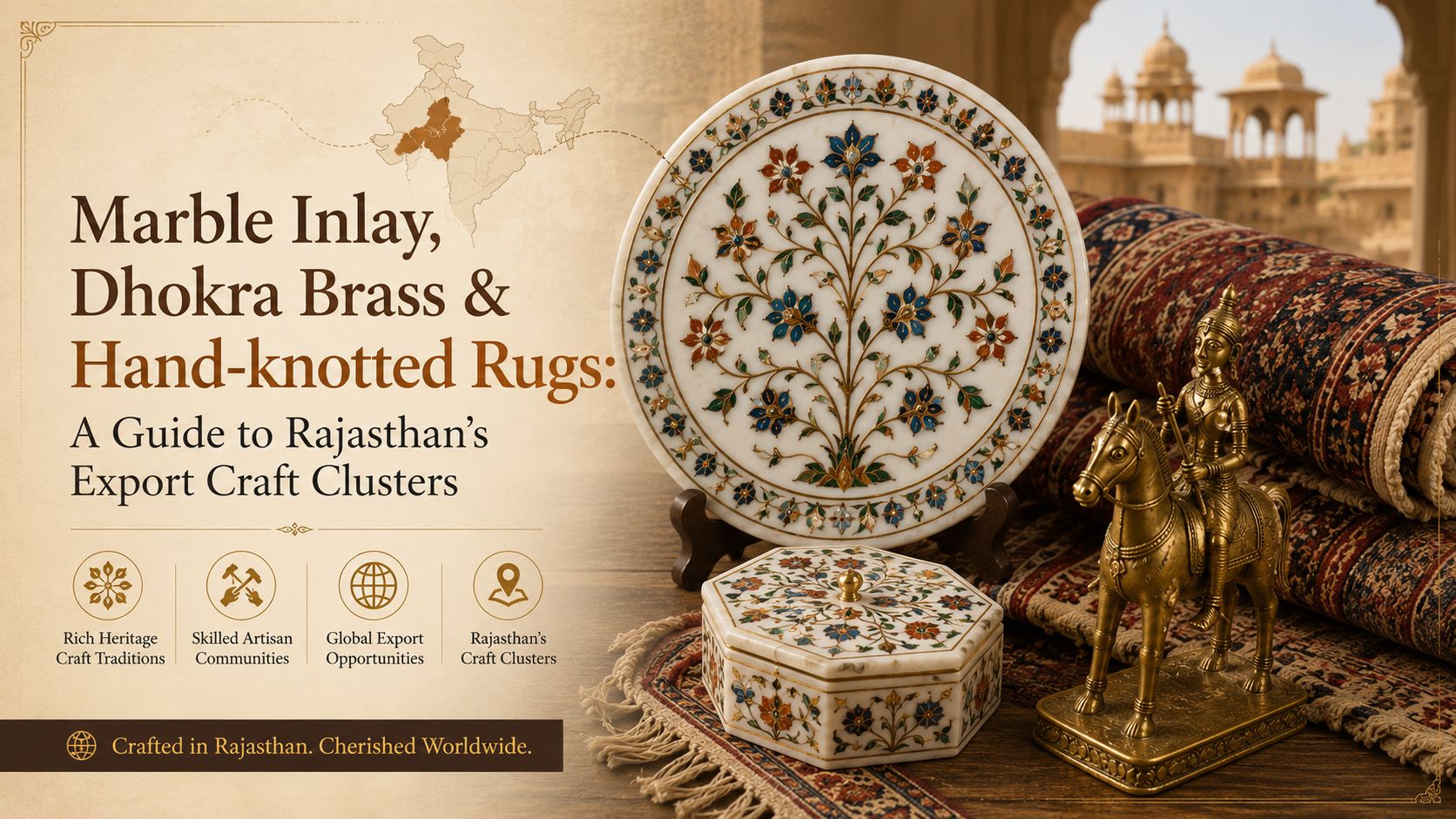
When international buyers ask us where our products come from, the answer is never one place. India’s handicraft landscape is extraordinarily regional — each state, sometimes each district, has mastered a specific craft using specific materials. Understanding these clusters helps buyers make more informed sourcing decisions and tell better product stories to their own customers.
Here is a guide to the key craft regions behind our product catalog.
Agra, Uttar Pradesh — The Marble Inlay Capital
The artisan families of Agra have been working in marble since the Mughal era. Many are descended directly from craftsmen who worked on the Taj Mahal. Their speciality is pietra dura — the technique of setting cut semi-precious stones into white Makrana marble to create floral and geometric patterns of extraordinary intricacy.
Lapis lazuli, malachite, carnelian, turquoise, mother of pearl — these stones are cut to shape and inlaid piece by piece into grooves carved into the marble surface. A single 12-inch decorative plate may contain over 200 individually cut stone pieces. The craft requires steady hands, exceptional eyesight, and years of apprenticeship.
Products from Agra: marble vases, inlay plates, coaster sets, painted marble, soapstone pieces.
Jaipur, Rajasthan — Brass, Stone & Carpets
Jaipur is arguably India’s most important export craft hub. The city and its surrounding district produce an extraordinary range of goods: hand-cast brass idols and decorative objects, blue pottery, soapstone carvings, onyx products, and a significant portion of India’s handmade carpet output. The craft bazaars of Jaipur’s old city have been supplying international traders for centuries.
Products from Jaipur: brass idols, soapstone vases, marble dust figurines, carpets, onyx décor, and tealight holders.
Kashmir — The World’s Finest Hand-knotted Carpets
Kashmir’s carpet-weaving tradition arrived with Persian influence in the 16th century under Mughal emperor Akbar. Today, the valley produces silk and wool carpets that are considered among the finest in the world — and command prices that reflect it. A genuine hand-knotted Kashmiri silk carpet can take six weavers six months to complete, with knot densities of up to 2,000 knots per square foot.
For export buyers, Kashmir carpets represent a product with a globally recognised reputation for quality — and a compelling story to sell to end customers.
Tamil Nadu — Wood Carving Traditions
The wood carving clusters of Tamil Nadu — particularly around Chennai and the temple towns further south — produce figurative carvings with roots in Dravidian temple architecture. Mango wood, teak, and rosewood are carved into Ganesha figures, elephants, deity panels, and abstract sculptures. The carving is bold, confident, and deeply rooted in a visual language developed over a thousand years.
Bastar, Chhattisgarh — Dhokra Brass
Dhokra casting is one of the oldest metal-working techniques in the world, practised by tribal artisan communities in Bastar for over 4,000 years. The process — lost-wax casting, using beeswax, clay, and molten brass — produces one-of-a-kind figurines and decorative objects with a raw, textured quality that is immediately recognisable. No two Dhokra pieces are identical.
For buyers seeking truly unique product stories and pieces with genuine tribal heritage, Dhokra offers something that cannot be replicated anywhere else.
Sourcing across these clusters — and managing quality control, documentation, and logistics for each — is exactly what Sahved Globals does. If you want access to any of these craft traditions on an export scale, get in touch.